
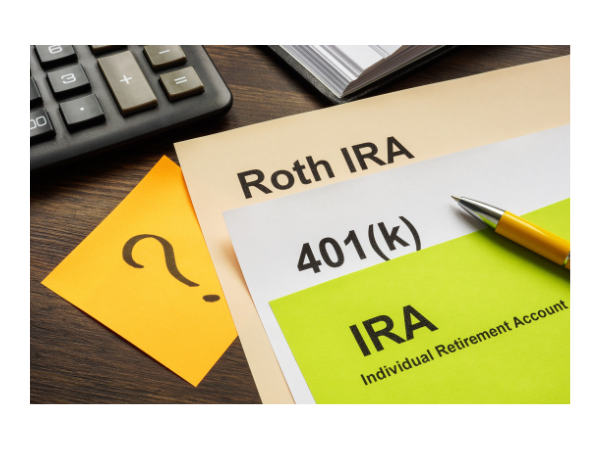

Roth IRA, Traditional IRA, 401(K) … what does this all mean? I am not rich enough to invest so why should I care or even know about this stuff? This is where a little knowledge and understanding can be life changing!
I was fortunate to grow up with a father who stressed investing for the future no matter how little I was making. I distinctly remember saying “Dad, I am only 22, why would I even care about retirement right now?”. I saw no reason to worry about some time in my life that was SO far ahead in the future, but I reluctantly agreed to start putting a small portion of my paycheck into my employer provided retirement plan. Boy, am I glad I did this! It is incredible what you can build over time even by putting a small percentage of your earnings into a retirement account, especially if you start in your twenties. No matter what age you are, there are great ways you can put money away to create a nest egg even if you are not making a ton of money. For the beginner investor, it can be very confusing and overwhelming. Let’s start by breaking down the basics.
If you work for an employer and are not self-employed, you should find out if there is a retirement plan that you can participate in. Many companies have plans and your eligibility to join these plans varies. Some companies let you join on day one of your employment and others require you to be there for some predetermined time. Even if you think you cannot afford to put money into a retirement account, find out what your employer has to offer. Many plans have a matching program where the employer will match a portion of what you contribute. That is free money and a great benefit that you could be missing out on!
Many companies offer a 401(K) plan which sounds daunting so let’s look at what a 401K is!

A 401(K) is a retirement plan that is sponsored by an employer, and it is named for the section of the IRS tax code where it is defined. It is called a defined-contribution plan where you contribute a portion of your earnings, and the employer may match a portion of your contribution. Most 401(k) plans are considered “traditional” plans where they take your contribution out of your check BEFORE they tax it. This is called a pre-tax contribution. So, what does this really mean? This means you are not paying tax on this portion of your pay. Let’s say you decide to participate in your company’s 401(k) plan and set it up to contribute 5% of your pay. If you earn $100, your employer will take $5 out of that and put it into your retirement plan. You will then pay tax on the remaining $95. This is called pre-tax contribution because you contributed to your plan before it got taxed. This is cool because you are only being taxed on the $95, but… later down the road you will eventually pay the tax when you use the money in your retirement plan.
The big attraction to 401(k) plans is that most employers do what is called a “match”. Each plan has its own terms, and it will be stated if your employer does a match. In many cases, the match is a predefined percentage amount and in other cases, it’s a dollar amount based on how the company is doing. In either case, this is money that your employer puts in your account on your behalf. This is “free money” that they add to your nest egg! So, as you can see, it’s a shame to give up the opportunity to get free money!
A common example is a case where the employer will contribute 50% of what you contribute up to a certain percentage. So, for example, a company match could be that they will match 50% of what you put in up to 6%. So, if you contribute 4%, they match 2%. If you contribute 5%, they contribute 2.5%, if you contribute 6%, they contribute 3%, and so on. Even if you are only making a few hundred dollars at a job, participating in a 401(k) plan will give you a way to get “free money” from your employer which will go into your account.
OK, so what is the catch? Well since the IRS is involved, there are lots of rules and the catch is… you cannot take this money out of your account technically until you reach the age of 59 ½ years old. The intention of this rule is that you are saving long term for your future and will not be trying to pull this money out to buy things. The IRS created this savings account with certain rules and if you do withdraw your money out from the 401(k) before you are 59 ½, you will be hit with a penalty (currently 10%) on top of the taxes you will owe on what you take out. Remember when you put this money into the account you did not pay taxes on it so Uncle Sam will be expecting you to pay taxes on it when you take it out.
A solid plan is to try to contribute a percentage to your retirement account, get the company match and just let it sit there for like 40 years! If you set it and forget it, your nest egg will grow, and you will be amazed at what you can achieve. You do not need to make a lot of money to participate. Every dollar counts and when you add in the employer match, you get that free money added to your account. Don’t miss the great opportunity if your employer offers it!


0 Comments